
PLAN A PRIVATE THAILAND TOUR
Why Travel Thailand?
Thailand covers a lot of ground: Bangkok's markets and skyline, Phuket's beaches, and Chiang Mai's temples and mountains are three very different trips inside one country. That range is part of why it works for beach holidays, family trips, golf trips, and group travel alike. Here's a rundown of what makes it worth the trip:
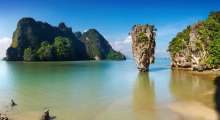
- Striking Natural Landscapes: Thailand's scenery ranges from the limestone cliffs of Phang Nga Bay and clear water around its islands to lush jungle and mountain views further north.
- Delicious Food: Thai cuisine is well known internationally for its balance of bold, contrasting flavors. Street food stalls and formal restaurants both deliver on that reputation, just in different settings.
- Rich History and Culture: Temples, historic palaces, and cultural festivals give visitors a direct look at centuries of Thai tradition, not just a summary of it.
- Friendly Locals: Thailand's nickname, the Land of Smiles, comes from its reputation for warm, welcoming people, and most visitors notice it within a day or two of arriving.
- Affordability: Between accommodation, dining, and entertainment options across a wide price range, Thailand tends to stretch a travel budget further than many other destinations.
- Trusted Local Expertise: For planning, Travel Thailand is a Bangkok-based tour operator that's been running since 2006, specializing in private and guided tours as well as travel packages across Thailand and Southeast Asia, including Vietnam, Laos, Cambodia, and Myanmar. Visit travelthailand.com to browse featured tours, travel styles, and customizable itineraries.
Between the food, the temples, the beaches, and the pace of daily life, Thailand tends to work for a wide range of trips, and over two decades of running tours here means Travel Thailand can usually put together a Thailand itinerary that fits what you're actually after.
Thailand Travel Packages
Thailand rewards a bit of planning, and TravelThailand builds Thailand travel packages around a few different kinds of trips. If beaches are the priority, our beach break itineraries lean into that. If you'd rather get out into jungle and adventure territory, the Thailand adventure tours cover that ground, and for temples, palaces, and Thailand's cultural history, there's the culture & history tour.
Each package already has transportation, accommodation, and day-to-day activities worked out, so there's less to coordinate once you land. For something more upscale, the luxury Thailand tour covers the same ground with higher-end stays and more personal service. Short on time works too: day tours can still fit in a lot in a single outing, whether that's a Mekong cruise or a morning wandering the floating markets.
Ready to Start Planning?
Take a look through the tours below and find the one that fits your trip.
Thailand & Indochina Tours
Creating Memories from Bangkok to Halong…

This luxurious, leisurely private tour is the perfect introduction to Thailand and the best of north Vietnam. You’ll be the guests of beautiful legendary hotels, tour with your own expert...
Price: from US $755
The fascinating Bangkok and Myanmar - 8 …

This package is designed for those who want to combine the top sites of these 2 countries in a short amount of time. Begin your journey in Yangon by visiting...
Price: from US $1,105
From Siam to Khmer - a Royal Heritage Jo…
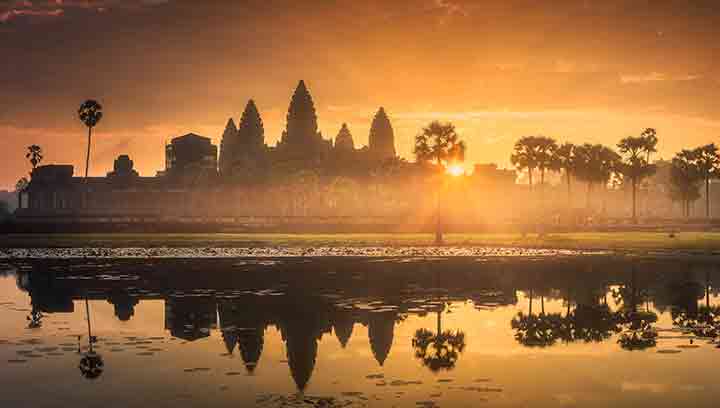
Anytime we travel to Thailand, it’s hard for us to resist the temptation to make a short side trip to Siem Reap, to explore the spectacular ruins of Angkor...
Price: from US $935
Thailand Tours
Thailand Discovery - 12 days
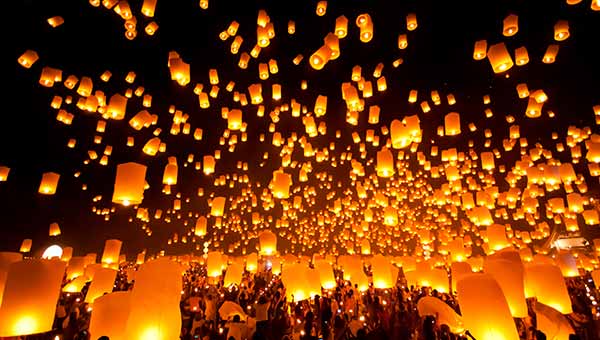
Explore the legendary sites and enjoy the rich history and culture of the historic kingdom of Thailand. You’ll visit the most exclusive locations, offering you the perfect opportunities for romance...
Price: from US $1,367
8-Day Thailand Tour: Bangkok, Chiang Rai…
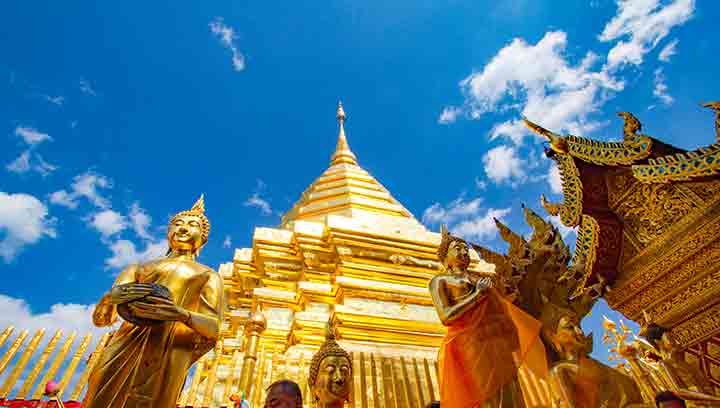
An 8-day Thailand tour is a convenient way to experience Bangkok, Chiang Rai, Chiang Mai and Phuket in one private journey. This 8-day, 7-night itinerary combines Bangkok’s historic temples, northern...
Price: from US $1,099
Bangkok & Ayutthaya - 4 days
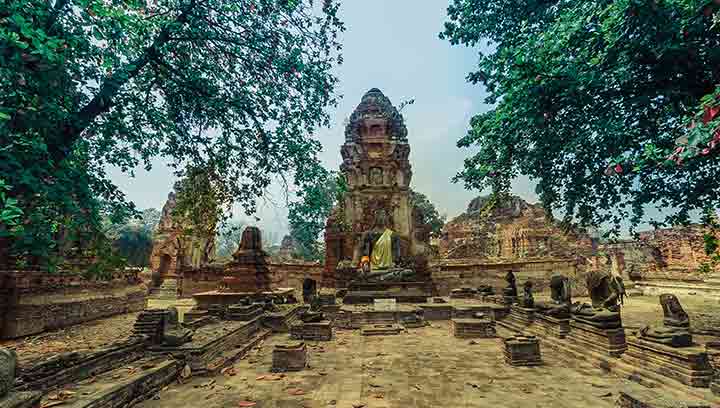
Bangkok is fast becoming the world's hottest city and this new three-day itinerary allows guests to explore the best of the pulsating Thai capital. View the city from the luxury...
Price: from US $298
Best Thailand Travel Packages & Custom Luxury Vacations
Things to Know When Travelling in Thailand



Frequently Asked Questions
A 10-day Thailand trip is enough to cover one city, one cultural or northern stop, and one beach region without feeling rushed - a common structure is roughly 3 days in Bangkok, 3-4 days in Chiang Mai or Ayutthaya, and 3-4 days on the coast. This length works well either as a standalone Thailand trip or as a shorter add-on to a longer Southeast Asia journey. Which beach region to include depends on the season, since Thailand's Andaman and Gulf coasts follow different monsoon patterns.
A 14-day itinerary comfortably fits Bangkok, northern Thailand, and a beach region in one trip - for example, 3-4 nights in Bangkok, 3-4 nights in Chiang Mai, and 5-6 nights on the coast. Two weeks also allows slower travel days between stops rather than back-to-back transfers, which matters for families and anyone who wants a less rushed pace. As with any Thailand itinerary, the best coastal destination to add depends on when you're traveling, since the Andaman and Gulf coasts don't share the same weather calendar.
Three weeks is enough time to combine Bangkok, northern Thailand, and multiple islands or a national park without constant travel days - typically 2-4 extra nights of trekking or island-hopping layered onto a standard 2-week route. This length suits travelers who want to island-hop across several destinations, such as Koh Tao, Koh Phi Phi, or Koh Lipe, rather than settling in one beach region, or who want to pair northern Thailand's national parks with the south's islands. It's also long enough to build in genuine rest days between more demanding activity days.
A well-paced 2-week family itinerary usually limits the trip to two or three destinations rather than moving every few days, since fewer transfers matter more with young children than seeing more places. A common structure pairs one beach region for easy pool days with one shorter cultural stop, such as Bangkok or Chiang Mai, keeping flights and transfer times as short as possible. Families traveling during school holiday periods should book accommodation and domestic flights well ahead, since these are peak travel weeks in Thailand.
Choose Phuket if you want the widest choice of family resorts, shorter transfer connections, and easy day trips to Phang Nga Bay or the Phi Phi Islands. Choose Koh Samui if your trip falls roughly between May and September, when the Gulf coast typically has calmer, drier conditions than the Andaman coast at that time of year. Both islands have well-developed family infrastructure - the main practical difference is which monsoon pattern suits your travel dates, since the two sit on opposite coasts with offset wet seasons.
A 10 to 14-day itinerary is a common length for senior travelers, allowing 2-3 nights at each stop rather than one-night stays that add unnecessary transfer days. A typical route combines Bangkok, Chiang Mai, and one beach or island destination, with a private guide and vehicle to control the pace and avoid long walks in the heat. Building in a rest day after arrival and after any flight helps with acclimatization, particularly outside the cooler November-February months.
Bangkok, Chiang Mai, and southern beach destinations such as Phuket or Krabi are the three most commonly recommended regions for older travelers, largely because they offer reliable private transport, accommodation with elevators and step-free access, and established medical facilities in the main tourist areas. Chiang Mai in particular offers a slower pace than Bangkok, with fewer crowds and shorter distances between sights. Scheduling sightseeing for cooler morning hours and avoiding long uphill temple routes also makes a noticeable difference to comfort.
A common 10-day honeymoon structure spends 2-3 nights in Bangkok, then moves to one or two beach or island destinations for 6-7 nights of resort time - for example Bangkok followed by Phuket, or Bangkok followed by Krabi and a smaller neighboring island. This balance gives couples culture and city time at the start without eating into the beach and resort days that are usually the main focus of a honeymoon. Private transfers and a private guide in Bangkok help keep the early part of the trip relaxed rather than rushed.
Choose Thailand if you want more variety within one trip - cities, temples, and several distinct island and beach regions on different coasts - or if you're combining the honeymoon with a wider Southeast Asia trip. Choose Bali if you want a single, more compact island with a strong wellness and villa culture. Both are well-established honeymoon destinations with a wide range of luxury resorts; the practical difference is mainly trip structure, since Thailand's regions are more spread out than Bali's.
A common private golf itinerary combines Bangkok with Hua Hin, alternating golf days with sightseeing or rest days over roughly 7-10 nights. Hua Hin alone has several well-regarded courses within a short drive of each other, including Black Mountain Golf Club, Springfield Royal Country Club, and Royal Hua Hin Golf Course - Thailand's oldest course, dating to the 1920s. Phuket is a common alternative or addition for golfers who also want beach time, since it combines golf courses with resort-standard hotels directly on the coast.
Choose Hua Hin if golf is the main focus of the trip - it has the highest concentration of well-regarded courses within easy reach of each other, plus a shorter transfer from Bangkok than Phuket. Choose Phuket if you want to combine golf with beach resort time, since its courses sit alongside some of Thailand's best-known coastal hotels. Both destinations are well established for golf tourism, so the choice mainly comes down to whether golf or beach time is the priority for the rest of the trip.
A luxury private itinerary in Thailand typically combines 5-star hotels or private-pool villas, a private guide and vehicle throughout, and one or two distinctive experiences per destination, such as a private boat charter, a spa afternoon, or after-hours access to a cultural site. A common route pairs Bangkok with one island or beach resort region, giving a mix of city culture and resort time without excessive travel days. In this context, "luxury" is less about the number of destinations and more about the quality of accommodation, guiding, and pacing throughout the trip.
Koh Tao, in the Gulf of Thailand, is one of the world's most established learn-to-dive destinations and also offers accessible snorkeling close to shore. Koh Phi Phi and the nearby Similan Islands, both in the Andaman Sea, are known for clearer visibility and more varied reef life, though the Similan Islands are typically only accessible by boat during the November-April season. Koh Lipe, in the far south of the Andaman coast near the Malaysian border, is a quieter alternative with easy access to Tarutao Marine National Park's snorkeling sites.
Chiang Mai is northern Thailand's most established trekking base, with multi-day routes into the surrounding hill areas and day trips to Doi Inthanon National Park, Thailand's highest point. Khao Sok National Park, further south in Surat Thani province, adds rainforest trekking and a stay on Cheow Lan Lake, and is often combined with a northern Thailand itinerary or a beach extension since it sits roughly midway between Bangkok and the Andaman coast. Both are best visited during the drier months, since trails can be muddy and leeches more common during the rainy season.
Ayutthaya Historical Park and Sukhothai Historical Park, both UNESCO World Heritage Sites, are the two most commonly used anchors for an educational Thailand itinerary, covering the ruins of two former Thai capitals and their surrounding temple complexes. Ayutthaya is a shorter day trip from Bangkok, while Sukhothai is usually reached via Chiang Mai or as part of a northern Thailand route, so the two are rarely combined in a single short trip. Both sites are largely outdoor, open-air locations with manageable walking distances for group visits.
Thailand is an established regional hub for corporate meetings and incentive travel - the country's official MICE bureau (TCEB) recorded 1.16 million international MICE travelers in its 2024 fiscal year, a 42% increase on the previous year. A common incentive-trip structure keeps meetings and formal events in Bangkok, which has the deepest hotel and conference infrastructure, then adds a shorter 2-3 night extension to a single destination such as Hua Hin or Phuket for team activities. Keeping the extension to one additional destination, rather than several, generally makes group logistics easier to manage.